
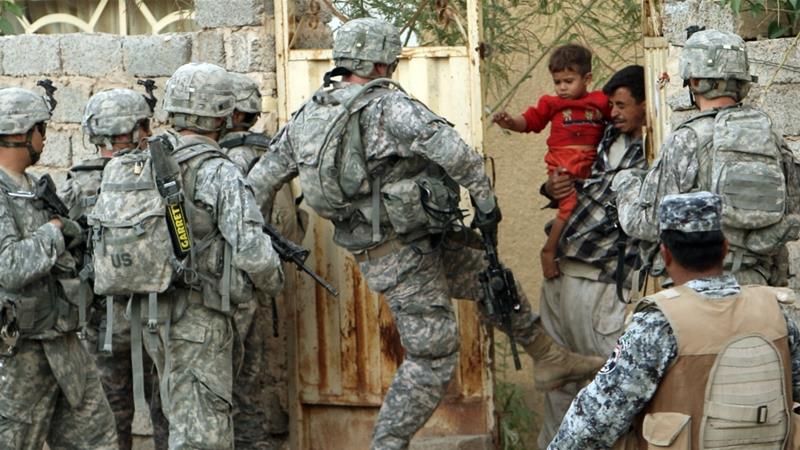
Since the attack on 9/11, propaganda has been utilized by the U.S. Government as a technique of war. To prove this point, I have incorporated a brief history of the events leading to the 2003 U.S. invasion on Iraq. First, Walter Lippmann establishes the idea of manufacturing consent to differentiate between the specialized class (those of higher authority) and the bewildered herd (the majority population). Noam Chomsky uses manufacture consent to show how the U.S. Government advances their power interests through propaganda as a technology of control. Secondly, the U.S. authoritative figures instill fear on society claiming that Iraq is a dangerous country in attempt to excuse the horrific acts of war and collateral damage. Furthermore, representation within the movie industry among other artistic media forms glorifies war and serves as a perfect source in the distribution of propaganda. Lastly, Edward Herman and Chomsky’s propaganda model depicts how media manipulates its audience to believe in an ‘us versus them’ disposition. Overall, these points illustrate how the U.S. Government uses propaganda to control the western civilization’s view of Iraq in order to serve their power interests.
In July 1988, following the ceasefire between Iran and Iraq, the U.S. wanted Saddam Hussein to replace his ‘troublesome tactics’ with peaceful resolutions (Hahn, 2012). Except Hussein wanted to seek territorial and economic gains by invading Kuwait from 1989-1990 (Hahn, 2012). He had a strong desire to profit from the oil in attempt to relieve the financial burden of the Iran-Iraq war; he wanted to gain support from neighbouring leaders and to attain the misappropriated land that was given to Kuwait (Hahn, 2012). During the Iran-Iraq war, President George H.W. Bush despised the expansionism of Iran and supported Iraq by providing economic aid, restoring diplomatic relations and sharing information about the Iranian forces (Hahn, 2012). It was not until Hussein’s Iraqi regime threatened to invade Kuwait, that Bush made the aggressive decision to place American soldiers in Saudi Arabia, near the border of Kuwait and Iraq, in order to deter the Iraqi military (Hahn, 2012). However, on January 2nd, Iraq offered to withdraw from Kuwait “in return for consideration by the Security Council of the Arab- Israeli conflict and the problem of weapons of mass destruction (WMD)” (Chomsky, 2002, p.59). Nobody knew this was a peace offering and that it was well supported by the Iraqi democratic opposition and two-thirds of Americans (Chomsky, 2002, p.58). Presumedly, when Hussein refused to withdraw from Kuwait, the U.S. proceeded with its Operation Desert Storm: five weeks of aerial assaults and ground invasions against Iraq for the liberation of Kuwait (Hahn, 2012). The U.S. prompted leaders of the U.N. to assess Iraq’s WMD in hopes of eliminating their usage (Hahn, 2012). When the regime failed to adhere to the U.N.’s restrictions, the U.S. military punished Iraq with another series of military airstrikes (Hahn, 2012).
In 1998, Osama bin Laden used Bush’s assaults on Iraq to declare war on the U.S. (Hahn, 2012). This later formulated the attack in 2001 on September 11th (Hahn, 2012). This provoked Bush to not only invade Iraq in attempt to overthrow Hussein, but he frightened the nation by claiming that the U.S. was in moral danger because of the WMD held in Iraq (Hahn, 2012). Although U.N officials had eventually cleared Iraq of WMD, Bush proceeded to continue persuading the nation using his personal security interests and further rebuffed the advice given from allied countries France and Germany to avoid unnecessary conflict (Hahn, 2012). Hussein was given 48 hours to leave Iraq and when he refused, Bush ordered the Pentagon to invade on March 19, 2003 (Hahn, 2012). With the implementation of 125,000 U.S. troops, 20,000 British troops and 500 Australian troops, it was a fast victory needing only 500 hours to overtake the country (Hahn, 2012). Iraqi detainees and citizens were abused, the U.S. discovered that Hussein lacked the capability to use WMD, and 51 billion U.S. dollars were wasted (Hahn, 2012). Months later, violence from three armed oppositions wanted revenge: The Sunnis, who were tied to Hussein, the Shiite Militia, who wanted to attain political influence in a post-Hussein era, and non-Iraqi Islamists (Hahn, 2012). By December of 2003, an outrage of violence between the U.S. and Iraq escalated, devoting the years to come to be known through the U.S. perspective as the ‘war on terrorism’ (Hahn, 2012). It is also important to note that before the ‘war on terrorism’ began, Iraq had been fighting Iran for eight uninterrupted years. Their military was greatly weakened and even then, Iraq needed support from the Soviet Union, Europe, the Arab countries and the U.S. to fight Iran (Chomsky, 2002, p.63). Chomsky argues that nobody illustrated this point and as a result, Iraq was deemed as a dangerous third-world country – that at any given moment could flatten America with its WMD (Chomsky, 2002, p.63).
In order to effectively infiltrate the use of propaganda among the western nation, those of higher authority must successfully impose their doctrines onto the majority population. In the book Media Control: The Spectacular Achievements of Propaganda, Chomsky introduces the term “manufacture consent” coined by theorist Lippmann. Lippmann differentiates between the two types of social classes: the specialized class (those of higher authority) and the bewildered herd (the majority population). He explains that the specialized class is formed by few, educated individuals who, “analyze, execute, make decisions, and run things in the political, economic and ideological systems” (Chomsky, 2002, p.16). These authoritative figures rigidly control the ‘bewildered herd’ to believe they serve a higher role in the decision-making processes (Chomsky, 2002, p.17). However, they are purposely positioned as spectators within society and only receive a powerful voice when they are called upon to vote for their choice in a representative (Chomsky, 2002, p.17). The public is made to feel like they are valid participants in a democratic society; in reality, this is the only control they are entitled to (Chomsky, 2002, p.17). This is perfectly orchestrated by the group of ‘responsible men’ who wish to maintain their power stance through the technique of propaganda (Chomsky, 2002, p.19). This is emphasized with Foucoult’s rhetoric, that having knowledge is power (McGee, 1998, p.35). McGee continues this thought by claiming that “power can’t be exercised without knowledge” (McGee, 1998, p.35) because both dispositions prove that rhetoric is needed to gain power. It shows people the art of persuasion through ‘plain folks rhetoric’, learning defence mechanisms, justification, proper implementation of evidence, and how to make judgements (McGee, 1998, p.31). Overall, the U.S. Government uses propaganda by exercising rhetoric as a technology of power when their knowledge can easily sway the majority population.
Furthermore, the U.S. Government distracts the ‘bewildered herd’ from challenging their interests by frightening them with media clips of violence situated in Iraq. The instillation of fear closes the people off from doing research on the facts and distracts them with American pop culture such as the Superbowl (Chomsky, 2002, p.28). The representation of violence terrorizes the western population in reverting to a collective identity; the people conform to a nationalist demographic which helps to excuse the sickly inhibitions enforced by the U.S. Government (Chomsky, 2002, p.44). Although many may not stand with the nation’s desire for war, the use of propaganda intelligently protects those in the U.S. at the expense of people in Iraq. Generally, the public does not want to resort to foreign killings and torture, so the government has to convince them it is okay due to the nation’s safety being at risk (Chomsky, 2002, p.30). Through the use of propaganda, they make the public believe that their intentions are ‘noble and right’ (Chomsky, 2002, p.35), and no other options are available. Mark Fisher illustrates this notion in Capitalist Realism by saying any sense of idealistic hope is an illusion (Fisher, 2009, p.16). Consequently, the ‘war on terrorism’ becomes idealistic because the hidden use of propaganda has the public believing no alternative exists, and if the idea of an alternative is presented it is, “easily painted as naïve utopianism” (Fisher, 2009, p.16).
In order to keep everyone distracted and conforming to a nationalist identity, slogans such as ‘support our troops’ are created to maintain a sense of harmony (Chomsky, 2002, p.26). Chomsky confirms that well constructed propaganda creates a slogan that nobody will be against because the ‘responsible men’ do not want the majority population to cause ‘trouble’ in an American democratic system (Chomsky, 2002, p.26). These slogans are highly effective because there is no meaning behind them; the simple phrases make it very difficult for the ‘bewildered herd’ to disagree with or question. Chomsky mentions that if the slogan was reversed to something like, ‘do you support our policy?’ it would allow the people to form an opinion, which is the opposite of what the government wants (Chomsky, 2002, p.26). America also uses the term ‘freedom’ which creates a dominant ideology that their human rights are more important than the average innocent person living in Iraq (Chomsky, 2002, p.37). They are made to believe all human rights abuses should be met by force, but fail to switch the perspective of those same abuses being inflicted onto their nation (Chomsky, 2002, p.53). Overall, the U.S. propaganda brainwashes the majority population to conform to an ‘us vs. them’ model; all the while, Iraq is portrayed as a corrupt, terrorist society with the intention of perpetrating danger onto the western civilization.
The western culture is famous for its movies and various art forms, yet this becomes problematic when these forms are the main source of distribution for propaganda. In The Society of the Spectacle, Debord makes a valid statement about how ideologies are represented in society, and how they impact the public. He explains this with, “when the real world is transformed into mere images, mere images become real beings – figments that provide the direct motivations for hypnotic behaviour” (Debord, 2014, p. 6). People make judgements based off their personal experiences (McGee, 1998, p.61) and demand to watch situations in television shows that are culturally real for them (McGee, 1998, p.58). However, these experiences broadcasted in the media are not the experience itself, but a representation of an experience (McGee, 1998, p.56). Movies and various art forms do portray relations as they exist in society (McGee, 1998, p.52), but these depictions are favoured to the public. Based on true events, the movie American Sniper is a prime example of how the film industry glorifies actions of war. The main character Chris Kyle is known for his ability to snipe insurgents; it is unclear whether any of his 160 confirmed kills were innocent civilians or not. As the storyline progresses, he becomes more obsessed with killing the Iraqi “bad guys” and raiding homes to create military bases in the name of his country. Movies like American Sniper help to support the idea of war and develop a framework that those who fight for the nation are the nation’s heroes. Chris Kyle remains a sniper ‘legend’ in America and claimed he only wishes he had killed more so, “the world is a better place without savages out there taking American lives” (Abley, 2015). Although there seems to be a great amount of backlash when people fail to support the troops, it is equally important understanding the difference between supporting war and the troops involved. The protection of human rights applies to all Americans just as much as it applies to the men, women and children who unfortunately lost their lives in Iraq. Altogether, the U.S. uses the rhetoric of media sources to distribute propaganda and serve their power interests to the nation.
Lastly, Herman and Chomsky created a propaganda model demonstrating how raw media must operate through five filters: ownership, advertising, the media elite, flak, and the common enemy (Chomsky, 2017). The mass media firms have ownership over what is fit to print; prioritizing profit (Chomsky, 2017). The stories of greater interest are more likely to be published than any form of critical journalism (Chomsky, 2017). The role of advertising also plays a large part in funding mass media corporations; the media must filter what news is published in favour of the advertising providers (Communication Theory, 2018). Additionally, not all journalism outlets have access to a direct source. For this reason, governments, corporations, institutions and other ‘experts’ are crucial for interviews and instigating their personal narrative to mass audiences (Chomsky, 2017). Groups of higher authority can also be detrimental to a company’s reputation meaning that many journalists respond with caution to avoid flak (Brahm, 2006). The final filter reverts back to Lippmann’s “manufacture consent” and shows how the media specifically reports to a targeted audience. Through the use of propaganda, these audiences are manipulated to be against a ‘common enemy’ such as: communists, terrorists, immigrants, or perhaps, the entire country of Iraq (Chomsky, 2017).
As a result of these five filters, the war between the U.S. and Iraq was crafted by propaganda through U.S. embedded journalists representing the Pentagon and the Bush administration (Kellner, 2003, p.152). When the invasion on March 19, 2003 occurred, U.S. television networks framed the violence as triumphant and often referred to it as ‘Operation Iraqi Freedom’ (Kellner, 2003, p.150). The overall message given to the western civilization was that the U.S. military wanted to free the people of Hussein’s nasty regime and somehow bring democracy to Iraq by killing thousands of people (Kellner, 2003, p.149). The U.S. networks focused on celebrating their intervention by broadcasting a sanitized view of the war, glorifying the demolished buildings as a win, rarely showing the Iraqi casualties and by providing a nationalist, controlled view of the war compared to the various networks on site (Kellner, 2003, p.152). Networks such as CNN, Fox News, and NBC cable provided little propaganda, yet the stories were one-sided and patriotic (Kellner, 2003, pg. 152). In comparison, Al Jazeera and independent journalists from Europe would frame the war as an ‘invasion’ and provide the most accurate information (Kellner, 2003, p.151-152). A CNN reporter by the name of Walter Rogers recounted that when one of his reports did show a dead Iraqi, there was a multitude of angry viewers commenting about how they do not want to see any dead bodies (Kellner, 2003, p.152). This illustrates how people would rather be in denial about the human cost of war (Kellner, 2003, p.152); especially when there was little to no comparison about the fact that the attack on 9/11 killed roughly 3,000 Americans and the invasion of Iraq left 130,000 civilians dead (Conflict Casualties Monitor, 2003). Of the 45,799 victims that the Iraqi Body Count (IBC) could identify through age cohort, 3,911 were children (Conflict Casualties Monitor, 2003).
It is evident that the U.S. Government successfully utilizes propaganda to control the western view of Iraq. They use ‘plain folk’s rhetoric’ to persuade the majority population and make them believe they live in a democratic society when in reality, they have little control in the decision-making processes. The U.S. Government terrorizes the people by threatening them with violent media news reports making them conform to the nation’s desire for war. Even though a general consensus of Americans may not believe killing and torture is morally acceptable, those of higher authority confirm that it is noble and right when the nation’s safety is at stake. Furthermore, slogans and pop culture are used to distract the ‘bewildered herd’ as a technique to brainwash the Americans that Iraq is a corrupt, terrorist society. Television, media networks, movies and other sources highly influence society by showing a representation of real life experiences. This becomes problematic when the U.S. uses media sources as a form of rhetoric to distribute propaganda and serve their power interests to the nation. Lastly, Herman and Chomsky demonstrated how the five filters of the propaganda model decide what is ‘fit to print’ and how many media networks misreported the invasion of Iraq in support of the Pentagon and the Bush administration. Altogether, the U.S. Government used and continues to use propaganda to control the western civilization’s view of Iraq in order to serve their power interests.
Works Cited
Abley, M. (2015, February 13). Watchwords: American Sniper Chris Kyle’s Victims Were ‘Targets’ and ‘Insurgents’. Retrieved from Montreal Gazette: http://montrealgazette.com/news/world/watchwords-american-sniper-chris-kyles-victims-were-targets-and-insurgents
Brahm, E. (2006, August). Propaganda – Beyond Intractability Project. Retrieved November 19, 2018
Chomsky, N. (2002). Media Control: The Spectacular Achievements of Propaganda. New York: Seven Stories Press.
Chomsky, N. (2017, October 17). Noam Chomsky: The five filters of the mass media. Retrieved December 5, 2018
Communication Theory. (2018). Propaganda Model – Communication Theory. Retrieved December 5, 2018
Conflict Casualties Monitor. (2003). Database – Iraq Body Count Project. Retrieved from Iraq Body Count: https://www.iraqbodycount.org/database/
Debord, G. (2014). The Society of the Spectacle. Bureau of Public Secrets.
Douglas, K. (2003). 9/11, spectacles of terror, and media manipulation . Tell Me Lies : Propaganda and Media Distortion in the Attack on Iraq, 144-156.
Fisher, M. (2009). Capitalist Realism Is There No Alternative. Winchester, UK: O Books.
Hahn, P. (2012, April). A Century of U.S. Relations with Iraq. Retrieved December 2, 2018
McGee, M. C. (1998). Rhetoric in Postmodern America: Conversations with Michael Calvin McGee / edited by Corol Corbin. New York: The Gulford Press.
Photograph by Goran Tomasevic. Reuters, 2008 https://www.aljazeera.com/indepth/opinion/invasion-iraq-original-sin-21st-century-180320095532244.html
 Life in Colour
0 comments on “The War on Iraq”