
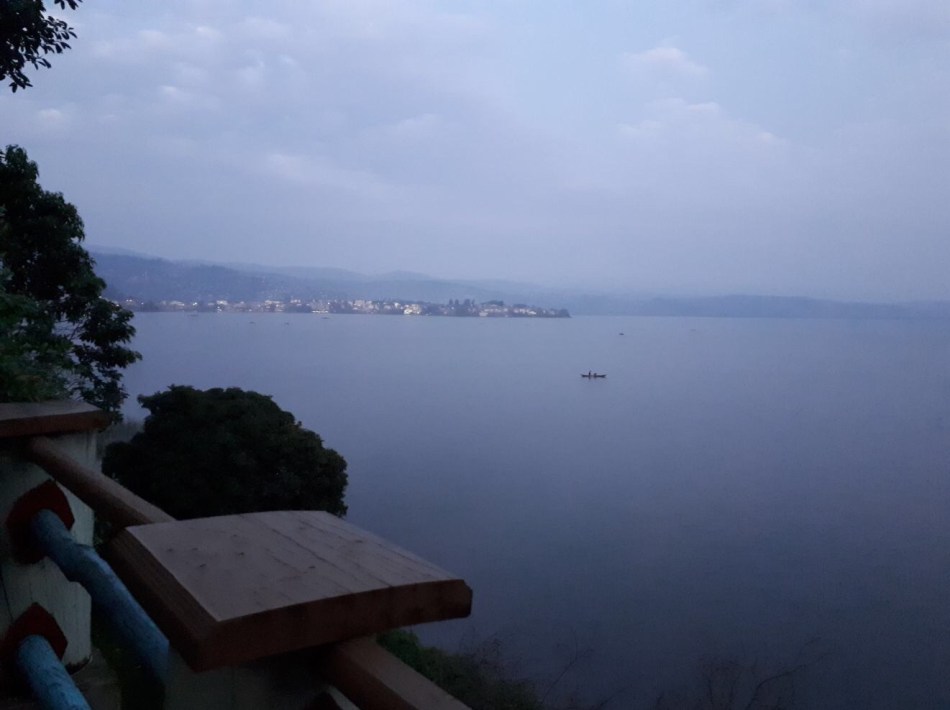
Photo taken on West Bank of Lake Kivu in Bukavu, DRC; a place where North American helicopters pick up mining materials. This image captures smugglers transporting minerals for a Canadian mining company called Barrick Gold. The company uses kids to transport the bags across the lake and load them onto a helicopter which flies them to Rwanda.
Introduction
Since 1997, the Democratic Republic of Congo (DRC) has been characterized as “resource cursed”: a theory demonstrating how a greater abundance of natural resources often coincides with a higher risk of civil war and slower economic development within a country (Carpenter, 2012). One of the major reasons why the “resource curse” exists is due to “a lack of democracy and the [Eastern Congolese] people have limited political power to hold their government accountable and push for change” (Cunningham, 2014, pg.40). Because DRC is socio-economically unstable, countries like Canada and the U.S. benefit by funding armed groups, rebels and the military in exchange for the natural minerals (Matthysen & Zaragoza Montejano, 2013). To begin, this essay gives a descriptive analysis of the ways resources are used globally and how this leads to the exploitation of them within Congolese communities. Secondly, the textbook Interplay: The Process of Interpersonal Communication, creates a foundational understanding of the need to communicate among an industrialized world (Adler, Rosenfeld, Proctor II, & Winder, 2016). This section develops on the idea that capitalist societies constitute ignorance, lack of global awareness and an absence of collective responsibility (DeVoe, 2011). Next, information regarding the Dodd-Frank Act Section 1502 critiques a major attempt at a traceability system; one that has both increased the conflict involving gold and dissuaded consumers from purchasing the natural minerals (Cunningham, 2014). Lastly, Cunningham (2014) analyzes how North America capitalizes on foreign labour regulations and contributes to the insecurity of the country. Overall these points illustrate that with an increase of technological consumerism, North Americans actively contribute and exploit the conflict mineral crisis in Democratic Republic of Congo.
Brief History and Synopsis of Conflict in DRC
Mineral deposits are scattered over the 11 provinces; North and South Kivu, Maniema, Orientale, and Katanga are mining hot spots for gold and other minerals known as the 3T’s: tungsten, tantalum and tin (Parker & Vadheim, 2016). These natural minerals are globally valued, sold to neighbouring countries, shipped and manufactured to companies in Asia, Europe and North America. Unfortunately, what may appear as a black and white trade of goods from one country to its global counterparts has resulted in approximately 5.4 million Congolese deaths (Ochoa & Keenen, 2011) and over 200,000 reports of mass rape (DeVoe, 2011). Yet, countries like the U.S. and Canada still add to the violence within Congo by funding DRC armed groups, rebels and the national military who control over 50% of the mines (Gobrecht, 2011).
3T’s and gold have a variety of uses among global nations. Tungsten is used in x-ray tubes, photocopiers and laser printers, but is mostly known to provide the vibrate function in mobile phones (Gobrecht, 2011). Tantalum is used in electronic components; it is mainly found within capacitors used for mobile phones and laptops (Gobrecht, 2011). It is also considered the “blood diamond of the mineral age”; most people recognize it as Coltan which is a combination of the minerals columbite and tantalum (Cunningham, 2014). Additionally, tin is a mineral source for cans, containers and tin solder while gold is used for jewelry and some electronic wires (Gobrecht, 2011). Globally, DRC contributes 6-8% of tin, 15-20% of tantalum, 2-4% of tungsten and less than 1% of gold. (Parker & Vadheim, 2016) Companies such as Nintendo, Samsung, Nikon, Sony, LG, Toshiba, Canon, Lenovo, etc. use these resources for their products; this would be acceptable if all the minerals used were “conflict-free” (Gavin, 2018). In turn, companies fund DRC armed groups, rebels and the national military to collect the minerals because they are familiarized with the area, in need of money and have nothing to lose (Gavin, 2018). In addition, the resources are traded in exchange for Western weapons (Cunningham, 2014) and warlords make a profit of roughly $180 million per year (DeVoe, 2011). Rather than using this money to economically advance the country (DeVoe, 2011), the “raw mineral extraction is the foundation of profit” for North America (Cunningham, 2014, pg.24).
These rebel groups further maximize their revenues by selling protection to neighbourhoods to gain power over communities where there is a lack of state authority (Parker & Vadheim, 2016). This occurs when groups station near mining sites for purpose of taxation; roving and stealing from civilians; and challenging other militia over control of deposits (Parker & Vadheim, 2016). Because of the western monopoly on foreign mining exploits, locals who find the natural minerals on their property are likely threatened, killed or bought out (Parker & Vadheim, 2016). The militia also use rape as a tactic of war because it not only sends a message that they have social control over the Congolese population (DeVoe, 2011), but it forces the communities to flee the area allowing the militia to gain access to the mines (Gavin, 2018). This leads to issues within the social and economic structure: women who are raped often get rejected by their husband and family; they are marginalized by their community and stigmatized by society (DeVoe, 2011).
Consequently, many children are left without families and see the military as a promising way to survive (Cunningham, 2014). Especially when the military offers “a place for these children, giving them food, security, and a ‘family’ to be a part of, as long as they will kill indiscriminately. Choice, future, and security are nuanced. The only choice in this context is that of a child soldier, or a miner” (Cunningham, 2014, pg.60). Because rape is used as a tactic of war, few survivors of sexual violence situated at the Panzi Hospital in Bukavu, DRC have spoken about infanticide; babies born as a result of sexual assault are killed shortly after birth (K.Giilck, personal communication, May 29, 2019). The women have also claimed that the community members and religious leaders may rule to do this as a form of protection so mothers do not carry out any harmful actions on themselves (K.Giilck, personal communication, May 29, 2019).
Furthermore, agricultural areas once used for farming are abandoned (Gavin, 2018); this is detrimental for women who account for 76.7% of farmers in DRC (The World Bank, 2019). Children also learn ways of torture, abuse and poverty which contributes to the cycle of mineral exploitation, corruption, issues pertaining to family relations and socio-economic instability (Gavin, 2018). It is important to recognize that the natural minerals are not the definite cause of conflict within the area, but rather contribute and prolong the conflict (Matthysen & Zaragoza Montejano, 2013). For decades, DRC has struggled with “governance and mining sector reforms, the disarmament demobilisation and reintegration (DDR) of armed groups, security sector reform (SSR), conflicts over land, refugees, a lack of state authority in the east and corruption.” (Matthysen & Zaragoza Montejano, 2013, pg.36). This means any resolution must not solely address conflict minerals, but the various areas of conflict and insecurity within the country as well (Matthysen & Zaragoza Montejano, 2013).
Communication Needs in the Western Civilization
To further understand the mass consumption of minerals used in the West, it is vital to examine the communication needs via technology in the modern world. According to the textbook Interplay: The Process of Interpersonal Communication, people communicate for physical, social, identity and practical needs (Adler, Rosenfeld, Proctor II, & Winder, 2016). Evidence shows that isolation is one of the worst punishments because people physically need to communicate and share their experiences with others (Adler, Rosenfeld, Proctor II, & Winder, 2016). Through communication people learn and gain a sense of identity based on how people react towards us (Adler, Rosenfeld, Proctor II, & Winder, 2016). Interactions allow others to help each other, feel included, have fun and exert influence and control in social situations (Adler, Rosenfeld, Proctor II, & Winder, 2016). People also must learn basic communication skills in order to complete life tasks (Adler, Rosenfeld, Proctor II, & Winder, 2016). However, with the expansion of industrialization and capitalism, people are more isolated and interact with others less (Adler, Rosenfeld, Proctor II, & Winder, 2016). The majority of people resort to communication outlets such as mobile phones, laptops, desktops and tablets, but frequently fail to recognize what this means for countries like DR Congo.
A scientific examination revealed that the estimated amount of minerals used per mobile device is as follows: tungsten (1.1g); tantalum (0.02g); tin (1.0g); and gold (0.02g) (Fitzpatrick, Olivetti, Miller, Roth, & Kirchain, 2014). Although these numbers may slightly vary depending on the brand (Fitzpatrick, Olivetti, Miller, Roth, & Kirchain, 2014), the message is clear: people living in the West and other parts of the world have a collective responsibility because these minerals are apart of their daily lives and conveniences (DeVoe, 2011). Note that unlike illegal goods such as cocaine, 3T’s and gold have similar negative implications yet are “hidden” in profitable consumer goods and play a central role in western life (Ochoa & Keenen, 2011). However, it is contradictory in the sense that people want to communicate using the newest technological commodities, but they also do not want to contribute to the war involving conflict minerals in DRC.
Drawing from the film City of Joy directed by Gavin (2018), Canada and the U.S. are both privileged nations; people living in either of these countries can actively turn a blind eye from the mass atrocities situated in DRC because they are not directly impacted by the conflict. People in the West perceive themselves as “far-removed” when in reality they are an influencer due to their role in purchasing the minerals (Gavin, 2018). It is also important to make a distinction between those who know the issue exists and those who have never heard of it at all. This is relevant because North Americans who understand the greater implications can a) research sources of products and devices before purchase and b) raise awareness about products, devices and brands that use “conflict-free” minerals to help diminish the contribution and funding to warlords (DeVoe, 2011). It is nearly impossible to imagine a future without modern technology, yet it is important for consumers to educate themselves on their individual role in the conflict crisis. Although using these technological devices is contradictory, choosing ignorance spreads more harm than good.
Issues of Traceability and Smelters
In 2010, the U.S. attempted to regulate the 3T supply chains by creating a traceability system known as Section 1502 of the Dodd-Frank Act (Matthysen & Zaragoza Montejano, 2013). This traceability operation requires suppliers to tag each bag with the origin of the mineral, point of extraction, processing and quantity (Matthysen & Zaragoza Montejano, 2013). Suppliers also must certify that no armed groups are directly or indirectly involved or benefitting from the trade (Ochoa & Keenen, 2011). This valuable information is stored in logbooks and frequently updated maps that are able to trace and identify areas of conflict in connection to the minerals (Matthysen & Zaragoza Montejano, 2013).
Although this system seems very effective, many DRC armed groups, rebels and militaries discover loop holes to continue mining and selling the conflict minerals. Research shows that 98% of gold in DRC is smuggled because it is both treasured and small whereas 3T’s are easier to trace due to a lack of machinery within DRC that can properly separate excess waste rock (Parker & Vadheim, 2016). Therefore, buyers can identify the origin of 3T’s from the colouration and texture of the minerals (Parker & Vadheim, 2016). The gold used in Middle East and East Asian countries to make jewelry is not regulated under the Dodd-Frank Act; for this reason, gold is often considered de facto exempt because it is easier to smelt (Parker & Vadheim, 2016). The U.S. industry has been criticized for its resistance of the Dodd-Frank Act Section 1502 because most smelters stop sourcing the minerals from DRC which enables them to use the “conflict-free smelter status (CSS)” (Matthysen & Zaragoza Montejano, 2013).
For example, in 2011 it was found that miners in Rwanda were tagging Congolese conflict minerals as “Rwandan” to continue making profit (Seay, 2012). As a result, 70 tons of minerals were returned to Congo (Seay, 2012). It is fair to draw conclusions that this example is not the only case where tags were intentionally mislabelled for the sake of U.S. buyers to claim CSS in order to maintain a good reputation and make a profit. However, most companies do not want their name attached to the blood in DR Congo so they trace their production line to ensure they did not fund armed military groups (Cunningham, 2014). There is also an existing ‘name and shame’ game that has become a staple for the reduction of western consumerism in the hopes that it will dissuade consumers from purchasing the products and encourage companies to seek conflict-free minerals (Cunningham, 2014). Brands like Intel, HP and Apple have been key advocates for conflict-free resources which provides motivation for other companies to confirm they are not backing armed rebel groups and contributing to the ongoing conflict (Cunningham, 2014).
Capitalism and Future Legislation
Collier states, “the true cause of much civil conflict is not the loud discourse of grievance but the silent force of greed” (Cunningham, 2014, pg.44). This is demonstrated in the following example. In 2006, the price of gold was $600 per ounce in the U.S. and with a rise in profitability, the price increased to $1900 by 2011 (Cunningham, 2014). A similar experience occurred with tantalum in 2000 when it was priced at $30 per pound and jumped to $300 in the U.S. overnight (Cunningham, 2014). This is attributed to the demand for recreational devices such as gaming systems used in the western world that contain the 3T minerals (Cunningham, 2014). All of which are tied to the global economy and the incentives, greed for profit and the overall exploitation and involvement with the Congolese resources (Cunningham, 2014). The U.S. capitalizes on the “reduced cost of labor regulations outside the U.S. and other Western powers” (Cunningham, 2014, pg.25). According to Engineering & Mining Journal’s “Annual Survey of Mining Investment”, in 2009, the U.S. had a 15% share in Africa’s minerals investing $68 billion (Cunningham, 2014). By 2013 the U.S. had a 14% share and invested $110 billion (Cunningham, 2014). Research also demonstrated how the civilians are “excluded from rights to the territory and left to deal with the environmental pollutants when the mine closes” (Cunningham, 2014, pg.27). This is extremely unfortunate as the mines are essential for these communities to earn an income and they are left to navigate environmental and health risks without support from developed countries (Cunningham, 2014).
Since the enactment of the Dodd-Frank Act, there have been concerns whether the legislation has helped reduce the conflict in Eastern DRC (Parker & Vadheim, 2016). The Act was passed through an omnibus bill and is noticeably packed with information including multiple sections regarding various topics; feasibly, the public and lawmakers could not have read the entire bill and fully understood its short and long term impacts. Evidence claims that conflict has since increased in areas of unregulated gold (Parker & Vadheim, 2016) and that there have been substantial socio-economic effects on the local mining communities (Matthysen & Zaragoza Montejano, 2013). Congolese civilians explained how the miner’s incomes were often spent on food, other necessities, alcohol and prostitutes (Matthysen & Zaragoza Montejano, 2013). Yet, both the results of Section 1502 and irresponsible spending lessen the amount of children and wives able to afford healthcare, livestock and the ability to save money and receive an education (Matthysen & Zaragoza Montejano, 2013). Although this decreases the standard of living for many people in DR Congo, due to the lack of employment opportunities, civilians often get pulled into mining work because of the power, source of income and protection it provides (Matthysen & Zaragoza Montejano, 2013). Overall, this shows how capitalism influences North American buyers to make a profit from countries that have a high abundance of mineral wealth, yet a lack of government authority and economic stability.
Conclusion
In conclusion, North America plays a central role in the mass atrocities occurring in DRC due to their consumption of 3T and gold minerals. Cunningham (2014) explains that, “corruption and violence often result from the exploitation of nature and inequality of power in the context of neoliberal globalization” (pg.96). This concludes that capitalist ideologies influence societies to become large consumers at the expense of others’ lives. When the demand and profit of 3T’s and gold increases, there is an incentive to continue mining despite the bloodshed and increase of products (Cunningham, 2014). Armed groups, rebels and the military use both weapons from the U.S. and Canadian buyers and rape to control the Congolese population (DeVoe, 2011). Therefore, the communities are left at a great disadvantage, experiencing socio-economic issues involving a lack of government authority, local ownership of resources, employment opportunities, corruption and the exploitation of minerals (Matthysen & Zaragoza Montejano, 2013). This leads to mass populations of vulnerable women and children, an absence of space for safe and productive farming and impoverished communities (DeVoe, 2011).
In contrast, the western civilization advances with the increase of technology at the expense of lives in DR Congo. North Americans have a collective responsibility for these issues and need to recognize that they are not “far-removed” from the situation at all (DeVoe, 2011). Consumers can educate themselves on the impacts of conflict minerals and make decisions to purchase resources that are labeled as conflict-free (Ochoa & Keenen, 2011). It is important to question whether future legislation will reduce sales and outweigh the economic gains, yet, boycotts, consumer awareness and targeting sanctions from state or international organizations are still essential ways to help (Ochoa & Keenen, 2011). Additionally, an emphasis on the improvement of traceability measures can lessen the benefits and funding to rebel groups who terrorize the civilians (Seay, 2012). For example, a UN Special Representative on Sexual Violence in Conflict, Margot Wallstrom, explained how it is OK for companies to continue purchasing these minerals as long as they are conflict-free, but should include third party audits who can minimize the risk of trading to warlords (DeVoe, 2011). Overall, certifying conflict minerals is complicated (Cunningham, 2014), but this does not dismiss that with an increase of technological consumerism, North Americans actively exploit and contribute to the conflict mineral crisis in DRC.
References
Adler, R. B., Rosenfeld, L. B., Proctor II, R. F., & Winder, C. (2016). Interplay: The Process of Interpersonal Communication. Don Mills: Oxford University Press.
Carpenter, L. (2012). Conflict Minerals in the Congo: Blood Minerals and Africa’s Under-Reported First World War . 1-25.
Cunningham, L. M. (2014). “Transparency in mineral extraction: the commodity story, the Dodd-Frank, and the emergence of ‘conflict-free'”. Retrieved from http://cedar.wwu.edu/wwuet/353
DeVoe, A. (2011). Carrying a Piece of Congo in Our Pockets: Global Complicity to Congo’s Sexual Violence and the Conflict Minerals Trade . Seattle Journal for Social Justice , 463-507.
Fitzpatrick, C., Olivetti, E., Miller, R. T., Roth, R., & Kirchain, R. (2014). Conflict Minerals in the Compute Sector: Estimating Extent of Tin, Tantalum, Tungsten, and Gold Used in ICT Products . Environmental Science and Technology, 974-981.
Gavin, M. (Director). (2018). City of Joy [Motion Picture].
Gobrecht, H. D. (2011). Technically Correct: Using Technology to Supplement Due Diligence Standards in Eastern D.R. Congo Conflict Minerals Mining. Journal of Law, Technology and Policy, 415-433.
Matthysen, K., & Zaragoza Montejano, A. (2013). ‘Conflict Minerals’ Initiatives in DR Congo: Perception of local mining communities . Antwerp.
Ochoa, C., & Keenen, P. J. (2011). Regulating Information Flows, Regulating Conflict: An Analysis of United States Conflict Minerals Legislation . Goettingen Journal of International Law, 129-154.
Parker, D. P., & Vadheim, B. (2016). Resource Cursed or Policy Cursed? U.S. Regulation of Conflict Minerals and Violence in the Congo. Journal of the Association of Environment and Resource Economists , 1-63.
Seay, L. E. (2012). What’s Wrong with Dodd-Frank 1502? Conflict Minerals, Civilian Livelihoods, and the Unintended Consequences of Western Advocacy . Center for Global Development , 1-28.
The World Bank. (2019, April). Employment in agriculture, female (% of female employment) (modeled ILO estimate). Retrieved from Worldbank.org: https://data.worldbank.org/indicator/SL.AGR.EMPL.FE.ZS?contextual=ag-employment-by-gender&end=2018&locations=CD&start=1991&view=chart
 Life in Colour
0 comments on “Western Consumerism Leads to Mass Bloodshed and Instability in DR Congo”