
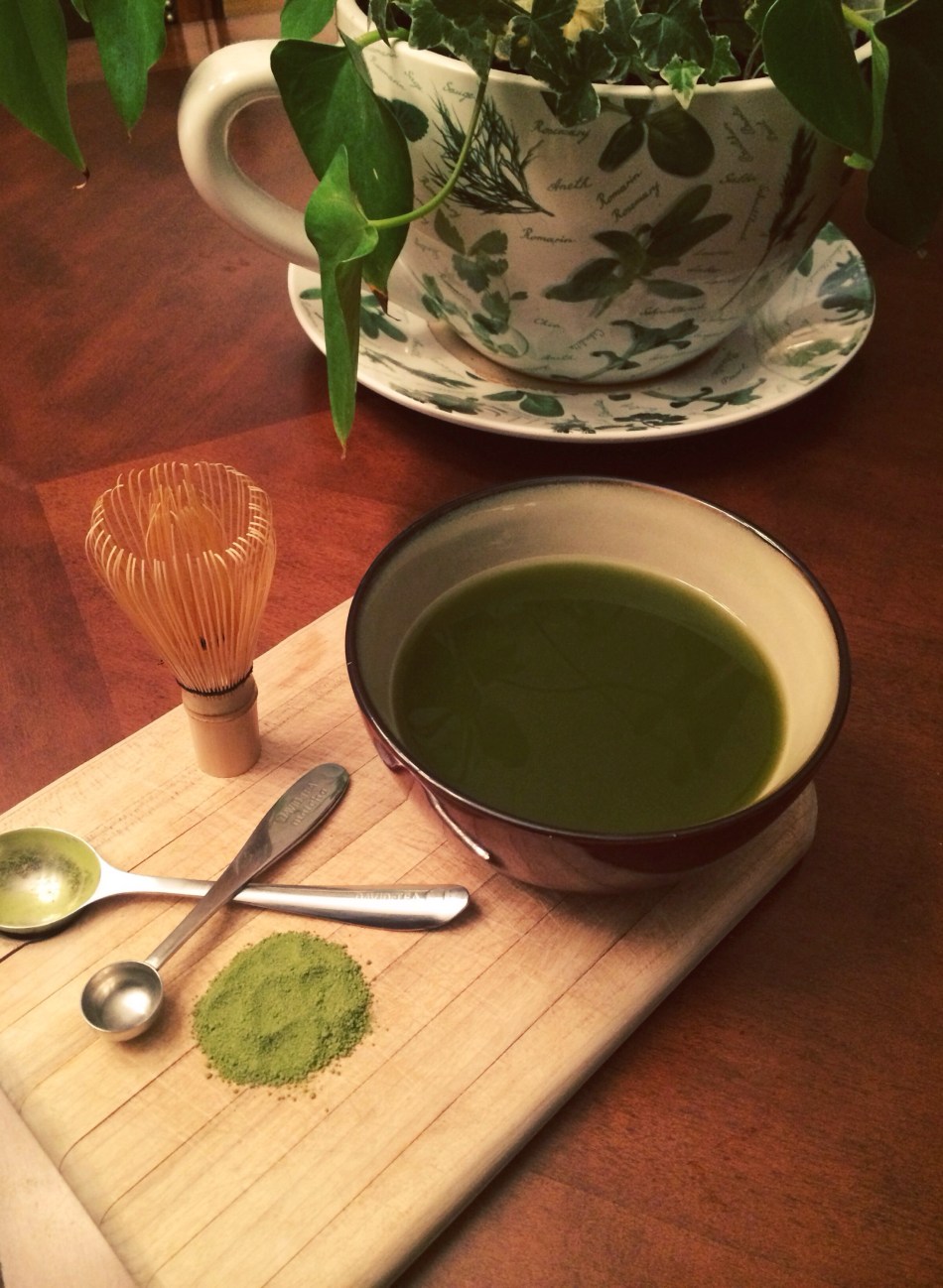
The world-spread Matcha craze has only just begun folks! Drinking this delicious tea with or without added milk or sugar, mixing it with your morning smoothie, or using it as a main ingredient to complete your cooking and baking fiasco, this healthy green tea may drive you to join the ‘Matcha madness’ fun. So, you might be asking yourself, what’s all the hype on Matcha green tea and what is it? It’s truly tea-riffic – yes, I too, have been persuaded into joining the Matcha mania!
Matcha is a green tea that includes many beneficial factors, encouraging many people to switch from their regular coffee intake, to a far healthier beverage. Although Matcha does have a low caffeine rating, it has the same effect as drinking coffee, just without feeling jittery or as if you have a grand coffee-buzz. The taste of this tea is either a hit or miss due to its bold flavour. Matcha has earthy and grassy tones, all-the-while being a green opaque colour because the Matcha leaves contain chlorophyll. Matcha has an acquired taste, however by trying a few cups and using less or more of the Matcha powder or by adding milk and/or sugar, you can perfect the way you like to drink it!
This healthy green tea originated in China, but it was never truly a significant value to their culture. It wasn’t until the late 1100‘s that the Japanese people realized its true potential and began to use it for meditational purposes. Zen buddhist monks drank the Matcha tea to remain calm and alert during meditation. Since then, Matcha tea is used in Japanese tea ceremonies and has become very popular all around the world.
The production of this green tea requires a substantial effort. The Matcha tea leaves are grown from the Camellia Sinensis plant. Before harvesting the tea leaves, the plant is covered by shade cloths producing more texture and a much richer taste. The Matcha leaves are hand-picked, de-vined and de-stemmed. The leaves then proceed to be steamed in order to stop fermentation. Next, the leaves are dried and aged in cold storage. During this process the flavour of the Matcha leaves deepen. Once the leaves have dried, they are stone-ground into a fine powder and voila, the tea is ready to be brewed!
Matcha is a powdered tea, which may seem strange, but it proves to be quite interesting to make compared to regular tea! When making a usual cup, the leaves are discarded after they have steeped for a span of 2-4 minutes with regard to white, green, oolong, black, pu’erh, and maté teas. Rooibos and herbal teas can be steeped for a long time depending on how strong you like it. However, with Matcha tea, the powder is formally whisked using a bamboo whisk (chasen) in a bowl (chawan) of hot water. Others may also use a spoon (chashaku) to press the remaining clumps (if any).
There are many different Matcha blends that have been manufactured. Some Matcha teas even have added flavours to lighten the strong, green, earthy taste. In the Japanese culture they say, “koicha,” which is a thick tea meaning that the Matcha needed to measure a perfect cup is doubled and less water is required. To use this technique you must make slower stirring motions so that no foam or bubbles will be produced. Usually when making “koicha” Matcha, it is more expensive yet has a milder, sweeter taste. “Usucha” means thin tea, so by using less Matcha, the taste will be lighter and extra bitter. Again, it’s all about your taste preference.
By drinking Matcha tea, you are consuming a variety of essential vitamins, minerals, amino acids, and antioxidants that will benefit your health. Because the tea leaves are ingested, you are gaining more antioxidants than the average cup of tea. Within the Matcha leaves, there are polyphenol compounds called catechins (which is a type of antioxidant) that may protect the body against heart disease, cancer, blood sugar regulation and reduction, and anti-aging. Matcha can also help to boost your metabolism and energy level, reduce stress, increase focus and concentration, and lastly, cleanse the body by detoxifying your system. Not only does Matcha have many health benefits, but it also contains potassium, vitamins A and C, iron, protein, fiber and calcium.
Matcha tea has since become a very popular asset to health fanatics and tea-lovers, but also to the cooking and baking community. That’s right, Matcha can be an added ingredient to complete your favourite dish! By adding a teaspoon or more to a food recipe, you can make an enjoyable, new way to keep your cooking or baking method fresh and exciting! Matcha is typically added to desserts or treats such as macaroons, cookies, brownies, swiss rolls, ice cream, and cheesecake. But some other recommendations are Japanese udon noodles, pretzels, muffins, rice, bread, pudding, and soup.
Altogether, by drinking Matcha, there are many beneficial health factors that may persuade you to try a cup! Even though Matcha has a very distinct taste and colour, it is quite delicious and worth the try! Making a cup of Matcha is rather fun and easy and has become a very admirable ingredient to several food recipes. So, join the Matcha craze, sip up and zen out!
Written by Tessa R. Adamski
 Life in Colour
0 comments on “Matcha Matcha Mania”